The Ultimate Guide: Small Bedroom Layout Ideas and Space Optimization
A small bedroom is a puzzle. You need a bed for rest, storage for your life, and enough "Negative Space" to breathe—all within a footprint that often feels too tight. Many people default to putting the bed in the middle of the room, which often leaves "dead space" on either side that is too small for a nightstand but too large to ignore. Professional small-space design is about Efficiency, Verticality, and Light.
This guide provides an expert breakdown of layout strategies for small bedrooms. We'll use RoomEnhance AI to show you how to test these layouts and styles before you make any permanent decisions.
1. The Anchor: Strategic Bed Placement
The bed is the largest object in the room and will dictate the flow of everything else.
- The "Corner Boutique" Strategy: In very narrow rooms, pushing the bed against a corner saves the maximum amount of floor space.
- Expert Tip: Use a headboard that wraps around the corner or add extra pillows along the wall to make the bed feel like a cozy "Daybed" during the day.
- The "Floating Center" Strategy: If you have at least 2 feet of space on either side, center the bed on the main wall. This allows for two nightstands, which creates a symmetrical, high-end "Hotel" feel.
- The "Under the Window" Rule: While traditional design says avoid windows, in a small room, placing the headboard under a window can save an entire wall for a large wardrobe. Just ensure your headboard is low enough to not block the light.
2. Thinking Vertically: The "Air Space" Advantage
When floor space is gone, look up. Every inch above 5 feet is prime storage real estate.
- The "Sky-High" Wardrobe: Use wardrobes that go all the way to the ceiling. This prevents "Visual Breakup" and provides a spot for seasonal items (suitcases, winter coats) that you don't need daily.
- Wall-Mounted Sconces: Replace bedside lamps with wall-mounted lights. This "Visual Cleanup" frees up the surface of your nightstand for things you actually need (your phone, a book, water).
- Floating Shelves: Use a single long floating shelf above the bed instead of a headboard. It provides storage and acts as a decorative focal point.
3. Visual Expansion: The "Magic" of Light and Color
- The Low-Profile Rule: Choose a low platform bed. By keeping the "Horizon Line" of the room low, the ceiling feels higher and the room feels larger.
- The Large Rug Secret: A small rug makes a small room feel smaller. Use a rug that covers almost the entire floor, extending at least 18 inches past the sides and foot of the bed. This creates one unified, expansive surface.
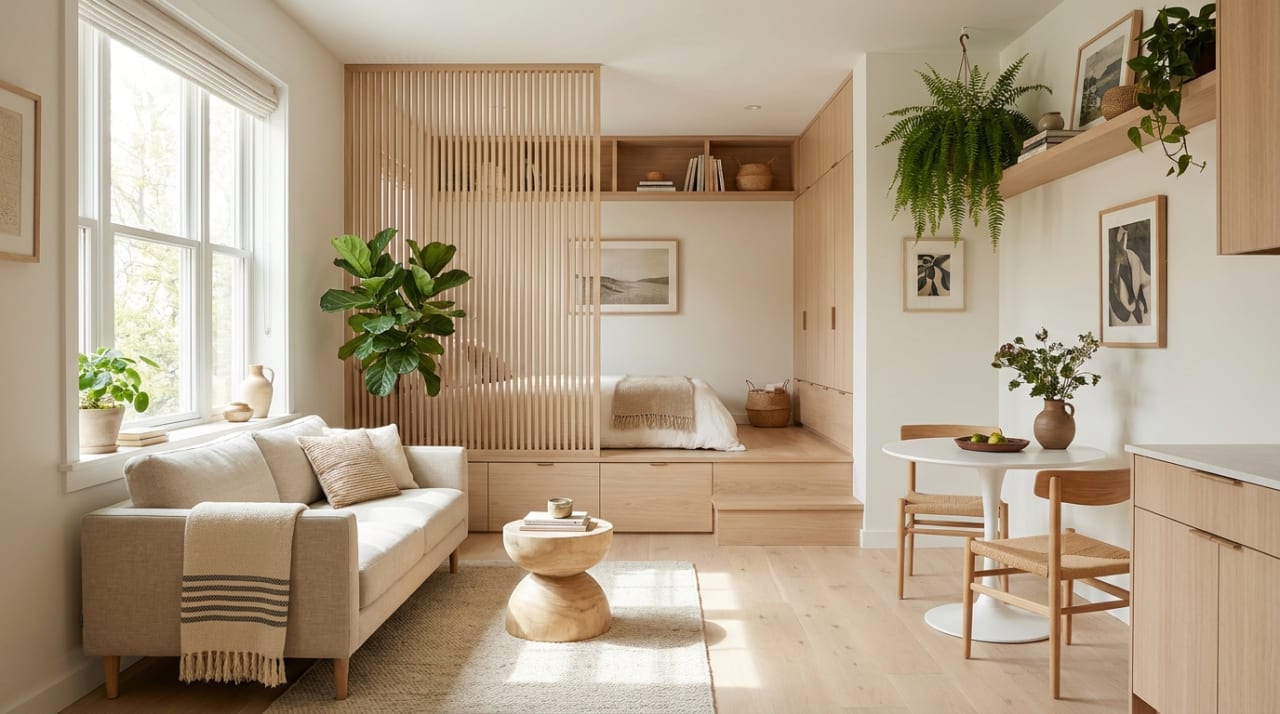
- AI Strategy: Upload your bedroom photo to RoomEnhance and try the Minimalist Style. Its focus on neutral tones and hidden storage is the perfect template for small bedroom success.
New Section: Expert Analysis - The "Fifth Wall" Optimization
The ceiling is the most underutilized space in a small bedroom.
- Vertical Curtains: Hang your curtain rod as high as possible—at the ceiling line, not the window frame. This "Stretches" the room vertically.
- Ceiling Paint: Painting your ceiling a very light, reflective white (or even a high-gloss finish) helps bounce light back down into the room, making it feel less like a "cave."
- Case Study: A user in a micro-apartment used RoomEnhance to plan their layout. By adding a "Mirror on the Ceiling" (a classic but risky move!) and a tall, mirrored wardrobe, they made their 100 sq ft room feel like a 200 sq ft loft.
New Section: Minimalist Wardrobe Integration - Hiding the Clutter
Visual clutter is the #1 reason small rooms feel stressful.
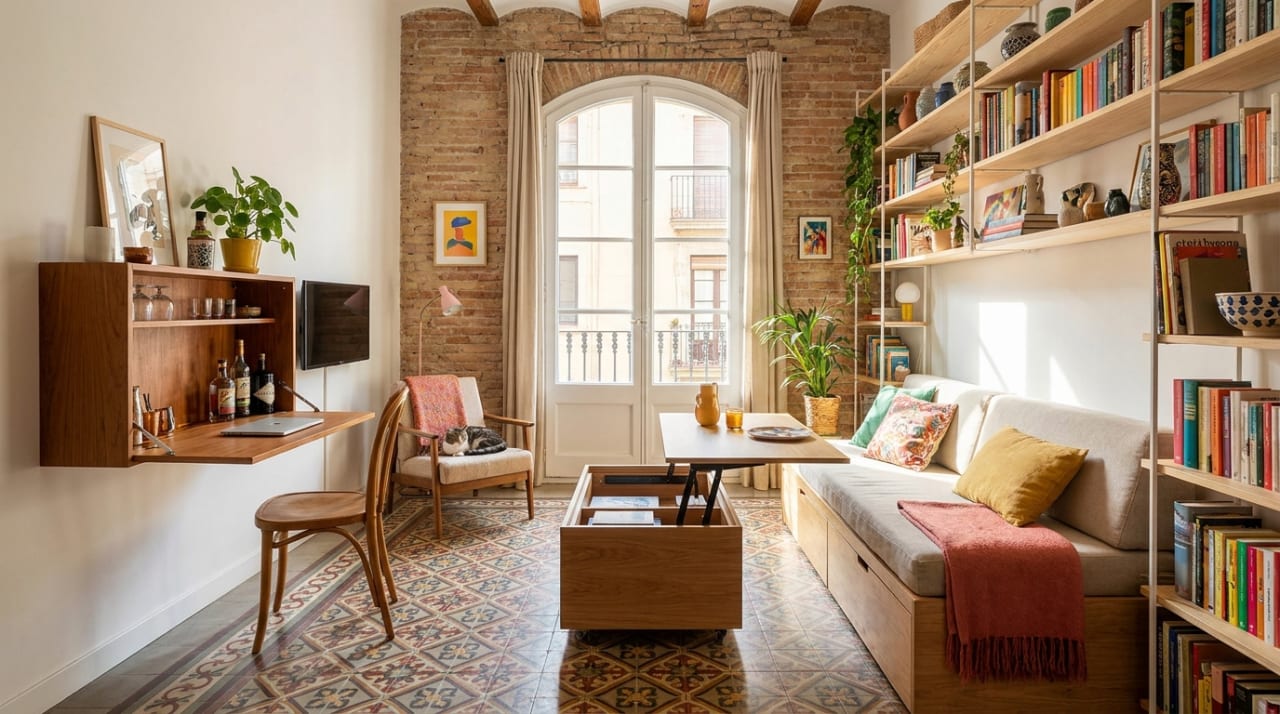
- Built-in Desks: Integrate your desk into your wardrobe system. A "Pull-out" desk shelf allows you to work during the day and "Delete" your office at night.
- Uniform Hangers: It sounds simple, but using matching hangers in an open closet reduces visual "noise" by 50%.
- Under-Bed Storage: Choose a bed frame with hydraulic lifts. This turns the entire footprint of your bed into a hidden, deep-storage trunk.
New Section: The AI-Assisted Decor Loop
In a small room, every accessory must be "High-Impact."
- Generate with AI: Create a "Scandinavian" version of your bedroom in RoomEnhance.
- Identify Key Accents: Notice where the AI placed the plants or the art.
- Scale Check: Use Compose Mode to test a "Large Statement Painting" vs. "A Gallery Wall." You'll likely find that one large piece of art makes the room feel much larger and more sophisticated than many small ones.
New Section: Troubleshooting the "Cramped" Vibe
If your bedroom still feels like a closet:
- Clear the Floor: If you can see the floor, the room feels larger. Choose a "Floating" bedside table.
- Mirror Placement: Place a mirror where it will reflect the "View" from your window, not just a blank wall.
- Lighting Layering: Add a small LED strip under your bed frame. This "Floating Bed" effect creates a sense of depth and airiness.
Verdict: The Small Bedroom Success Checklist
- Go Tall: Use the full height of your walls.
- Go Leggy: Choose furniture that stands off the floor.
- Go Light: Use a neutral palette with high-reflectivity.
- Go Big (with rugs): Define the space with one large texture.
Turn your tiny room into a sanctuary. Visualize your small bedroom makeover with RoomEnhance AI now!