
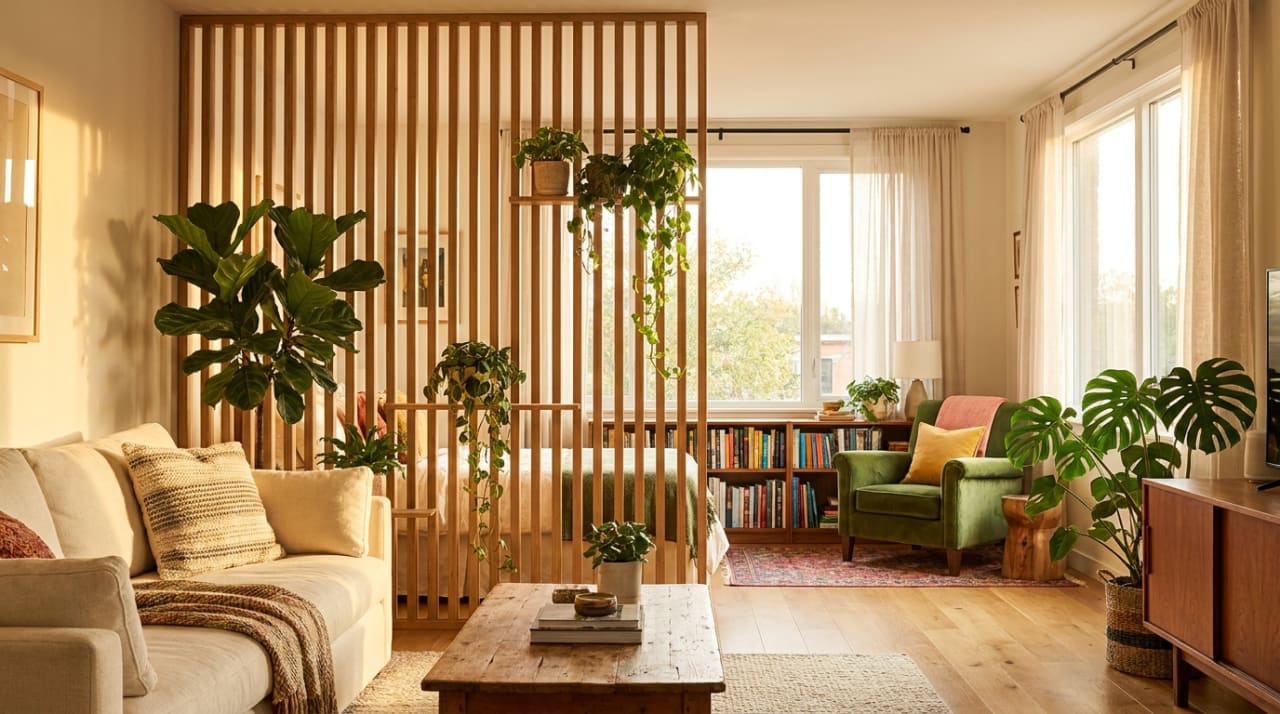
Creating a home that truly supports your lifestyle means designing spaces that adapt to your evolving needs, offering both areas for shared moments and private reflection. By embracing defined living zones and wellness-focused principles, you can transform your home into a sanctuary that seamlessly fosters connection while providing much-needed personal space and promoting overall well-being. RoomEnhance empowers you to experiment with these layouts and partitioning ideas virtually, ensuring your home becomes a personalized haven.
Why Are Defined Living Zones Essential for Modern Homes?
For decades, the open-concept floor plan reigned supreme, lauded for its expansive feel and perceived sociability. Removing walls between kitchens, dining rooms, and living areas created large, uninterrupted spaces, fostering a sense of flow and light. However, as lifestyles have shifted and homes increasingly serve as offices, schools, gyms, and entertainment hubs, the limitations of a purely open layout have become apparent. The constant visual and auditory sprawl can lead to a lack of focus, increased clutter, and a persistent feeling of being "always on."
Modern homeowners are realizing that true comfort often lies in intentional separation. Defined living zones address this by introducing subtle or distinct boundaries within a larger space. These boundaries create distinct areas, each with a specific purpose, allowing for a more nuanced home experience. Imagine a kitchen where cooking sounds don't overwhelm a video call in the living room, or a dining area that feels intimate enough for family meals without being completely isolated from the rest of the home. This approach supports a healthier mental environment by minimizing distractions and providing visual cues for different activities.
The concept isn't about reverting to rigid, closed-off rooms of the past. Instead, it's about intelligent spatial organization that balances the desire for connectivity with the fundamental human need for personal space and quiet. Architectural projects globally are exploring this balance. For instance, the El House in Jakarta, Indonesia, by Wahana Architects, offers a compelling illustration of how modern homes can achieve porosity and connection without sacrificing defined spaces. The design incorporates multiple internal courtyards and uses materials like perforated bricks and timber screens to create a dialogue between different zones, inviting light and air while maintaining a sense of privacy and distinct function for various areas. This nuanced approach ensures that while residents feel connected to nature and each other, they also have sanctuaries within the home for focused work or quiet contemplation. [https://www.archdaily.com/1042727/el-house-wahana-architects]
How Do Defined Zones Foster Both Connection and Privacy?
The beauty of thoughtfully designed zones lies in their ability to serve seemingly contradictory purposes simultaneously: encouraging family interaction while also safeguarding individual privacy. This balance is critical in homes where multiple generations or individuals coexist, each with unique routines and needs.
Consider a multi-functional family room. In a purely open-concept space, a child watching cartoons, a parent working on a laptop, and another family member reading might all be vying for visual and auditory attention. This can lead to sensory overload and disrupt focus. By contrast, a zoned approach might transform this single space into several distinct areas:
- The Family Hub: A comfortable sofa facing a media console, perhaps delineated by a large area rug or the back of another piece of furniture. This is where everyone can gather for movie night or conversation.
- The Reading Nook: A cozy armchair with a small side table and a dedicated lamp, perhaps tucked into an alcove or set behind a low bookshelf. This provides a quiet retreat for focused reading without feeling completely cut off.
- The Flexible Workspace: A small desk integrated into a custom built-in, or even a compact console table against a wall. When not in use, it might blend seamlessly, but when in use, its defined location signals a need for concentration.
This intentional segmentation prevents activities from bleeding into one another, reducing friction and enhancing the quality of each experience. Children can play in a designated zone without disturbing someone on a conference call. Someone needing quiet for meditation can retreat to a serene corner without feeling completely isolated from the family's presence.
Think of it as creating "rooms within a room." These subtle delineations allow a family to feel physically close and connected—sharing the same air, the same general light—while simultaneously granting each person the psychological space to engage in their chosen activity without interruption. A low-profile console table separating a living area from a dining space might not be a physical barrier, but it’s a clear visual cue that says, "This is where we dine, and this is where we relax." It provides a psychological buffer, making each space feel more purposeful and less chaotic.
What Are the Key Principles of Wellness-Focused Home Design?
Wellness-focused home design goes beyond aesthetics. It's about creating environments that actively support physical, mental, and emotional health. When integrated with defined living zones, these principles amplify the positive impact of your home on your daily life.
- Connection to Nature (Biophilia): Integrating natural elements into the home has profound benefits, reducing stress, improving cognitive function, and boosting mood.
- Concrete Application: Maximize views of natural landscapes outside through strategically placed windows. Incorporate living plants—not just a single potted plant, but clusters of diverse greenery like a tall Fiddle-Leaf Fig (Ficus lyrata) in a bright corner, a trailing Pothos (Epipremnum aureum) on a shelf, and a small herb garden on the kitchen windowsill. Use natural materials such as unsealed wood, stone, cork, or linen in furniture, flooring, and textiles. For instance, a dining table crafted from reclaimed oak or countertops made of natural quartzite can ground a space.
- Abundant Natural Light and Smart Ventilation: Sunlight is crucial for regulating circadian rhythms, boosting Vitamin D, and improving mood. Good ventilation ensures fresh air and reduces indoor pollutants.
- Concrete Application: Design zones to maximize natural light. If partitioning with screens, opt for translucent or slatted designs that allow light penetration, like a vertical wooden slat screen finished in a light natural stain. Use sheer curtains or blinds that can be easily opened or adjusted to control glare while still allowing light. For ventilation, incorporate operable windows on opposite walls to create cross-ventilation. Consider smart ventilation systems that automatically monitor air quality and exchange stale air with fresh, filtered air, especially in high-use zones like kitchens and bathrooms. Even simple practices, like opening windows for 15 minutes each morning, make a difference.
- Ergonomics and Comfort: Furniture and layouts should support natural body postures and movement, preventing strain and promoting relaxation.
- Concrete Application: In a home office zone, invest in an ergonomic chair with adjustable lumbar support and seat height, paired with a desk that allows for standing options or adjustable height (e.g., a Jarvis standing desk). In a living room zone, choose a sofa with medium-firm cushions and a seat depth (around 22-24 inches) that comfortably supports your thighs, allowing your feet to rest flat on the floor or a low ottoman. Ensure pathways are wide enough (at least 36 inches for primary routes) to move freely without bumping into furniture, reducing physical and mental friction.
- Air Quality and Non-Toxic Materials: Indoor air can be more polluted than outdoor air. Selecting materials free from harmful chemicals is paramount for respiratory health.
- Concrete Application: Prioritize paints with low-VOC (Volatile Organic Compound) or zero-VOC formulations (e.g., Benjamin Moore Natura or Farrow & Ball Estate Emulsion). Choose solid wood furniture over particleboard, which often contains formaldehyde. Opt for natural fiber rugs (wool, jute, cotton) instead of synthetic carpets that can off-gas. For flooring, consider cork, linoleum, or natural hardwood finished with water-based sealants. Regularly use HEPA air purifiers in frequently occupied zones like bedrooms and living areas to filter out allergens and pollutants.
- Sensory Experience: A wellness-focused home appeals to all senses, creating a calming and uplifting atmosphere.
- Sound: Incorporate soft furnishings like thick rugs, upholstered furniture, and heavy drapes to absorb sound, especially in areas needing quiet like a reading nook or bedroom. Consider white noise machines for sleep zones or a subtle water feature for a tranquil ambiance.
- Texture: Layer tactile materials. A boucle armchair paired with a chunky knit throw, a smooth polished concrete floor contrasted with a textured wool rug, or a rough-hewn timber beam against a smooth plaster wall. These variations provide visual interest and a comforting sensory experience.
- Scent: Use natural essential oil diffusers (lavender for relaxation in a bedroom, citrus for energy in a workspace) or incorporate fresh flowers and herbs. Avoid artificial air fresheners that can contain harmful chemicals.
Integrating these principles into your defined zones ensures that each area not only serves a specific function but also actively contributes to your overall health and happiness.
What Practical Strategies Can You Use to Create Defined Zones?
Creating defined zones doesn't necessarily require extensive renovations or erecting new walls. Many effective strategies involve clever use of furniture, lighting, and architectural elements. RoomEnhance allows you to effortlessly visualize these strategies, experimenting with different layouts and partition types before committing to any physical changes.
Physical Partitions: More Than Just Walls
Physical partitions offer the most distinct separation, but they don't have to be solid or permanent. The goal is often to suggest a division, not to seal off a space completely.
- Built-in Shelving Units and Half-Walls: These provide both definition and storage.
- Concrete Application: A floor-to-ceiling open-backed bookshelf (e.g., IKEA Kallax, but with higher-quality finish) can divide a living room from a dining area. The open shelves maintain light flow while offering display space for books and decorative objects. A low half-wall, perhaps 42-48 inches high, can define an entryway or a kitchen island, offering a sense of enclosure without blocking sightlines entirely. This is particularly effective in an open-plan kitchen-dining area where the half-wall creates a subtle barrier, allowing the dining zone to feel more distinct from the active kitchen prep area.
- Sliding Doors (Pocket, Barn, or Multi-Panel): These offer flexible enclosure, allowing you to open or close a space as needed.
- Concrete Application: Install a pocket door between a living room and a home office to provide privacy and sound dampening during work hours, then slide it into the wall for an open flow in the evenings. A barn door, installed on an exterior track, can add character and separate a media room from a main living space, offering flexibility for focused viewing or social gathering. For larger openings, multi-panel sliding doors with frosted glass can diffuse light while providing a soft visual barrier, ideal for a flexible den or guest room.
- French Doors and Glass Partitions: These maintain visual connection and light while offering sound separation.
- Concrete Application: French doors are perfect for separating a formal dining room from a more casual living space, adding elegance while allowing light to pass through. A steel-framed glass partition, or "Crittall-style" screen, can divide an entryway from a living room, creating a vestibule that contains coats and shoes without feeling cramped, or separating a bedroom from an en-suite bathroom while keeping the space feeling airy. The transparency allows for visual connection, essential for maintaining an open feel while adding definition.
- Screens (Wood Slatted, Woven, Fabric): Often more decorative, these offer soft partitioning and visual interest.
- Concrete Application: A custom-built wood slatted screen, with vertical slats 1-2 inches wide spaced 2-3 inches apart, can delineate a reading nook within a larger living area. It provides a semi-private feel without blocking light or air. A free-standing shoji screen can create a temporary privacy barrier for a guest sleeping area in a multi-functional room. For a softer look, large textile art panels or heavy, floor-to-ceiling drapery can be used to divide spaces, offering acoustic dampening and a luxurious feel.
Visual & Soft Partitions: Subtle Segmentation
These methods use design elements to suggest zones without any permanent physical structures. They are excellent for maintaining a sense of openness while providing subtle cues for different functions.
- Area Rugs: The simplest and most effective way to define a zone on the floor.
- Concrete Application: A large 8x10 foot area rug can anchor a seating arrangement in a living room, clearly marking the boundaries of the conversational zone. In an open-plan space, a smaller 5x7 foot rug might define a children's play area or a reading corner, signaling a shift in activity. Choose rugs that are proportionate to the furniture they contain, typically extending at least 6 inches beyond the main pieces of furniture.
- Furniture Placement: Strategically positioning furniture can create invisible walls.
- Concrete Application: The back of a large sectional sofa can act as a natural divider between a living area and a dining space. Placing a console table or a narrow bench behind a sofa facing away from the dining area further enhances this separation. An L-shaped desk can carve out a distinct home office zone in a corner of a larger room, its form naturally enclosing the workspace.
- RoomEnhance allows you to drag and drop different furniture pieces, trying out various configurations to see how they impact flow and definition in your virtual space. You can quickly experiment with different sofa lengths (e.g., 90-inch three-seater vs. 120-inch sectional) and orientations to see how each choice defines your living zone. This is also helpful for 15 Small Living Room Layout Ideas to Maximize Space and Style.
- Lighting Zones: Different lighting types and intensities can dramatically define areas.
- Concrete Application: Use a large pendant light or chandelier to anchor a dining table, clearly marking the dining zone. In a living room, a combination of general ambient lighting (recessed lights), task lighting (floor lamp next to an armchair for reading), and accent lighting (picture lights or uplights) can highlight specific areas. On a practical level, installing dimmers allows you to adjust the ambiance, making a shared space feel more intimate or more expansive depending on the need. A well-lit workspace contrasts with a softly lit relaxation area, guiding activity.
- Color Blocking and Accent Walls: Paint can be used to visually segment a space.
- Concrete Application: Paint one wall in a deep accent color, such as a rich forest green or a muted terracotta, to define a specific area like a home office nook or a meditation corner within a bedroom. You can also "wrap" a section of a wall and ceiling in a distinct color to create a cozy, cave-like effect for a reading area. Even a change in wall texture, like a section of wallpaper (e.g., a subtle grasscloth pattern) in one zone, can provide a visual break.
- Plants and Planters: Nature's way of creating soft, permeable boundaries.
- Concrete Application: A row of tall, leafy plants (e.g., Sansevieria, ZZ Plant) in decorative planters can act as a green screen between a bustling entryway and a quieter living room. A large, bushy plant like a Kentia Palm can fill a corner, making it feel like a distinct, nature-infused zone for relaxation. Grouping several medium-sized plants on a low console table can also serve as a visual divider, adding life and freshness.
Combining these strategies allows for a layered approach to zoning, where each element contributes to the overall definition and function of your home. For homes with limited square footage, these techniques are indispensable. Small Space Solutions: Transforming Compact Rooms into Functional Havens | Complete Small Space Design Guide – 25 Space-Maximizing Strategies, Multi-Functional Furniture & Storage Solutions | Urban Living Mastery delves deeper into maximizing compact rooms, which often relies on these very principles.
Multi-Functional Furniture: The Backbone of Flexible Zones
Multi-functional furniture is crucial for homes embracing defined zones, as it maximizes utility without sacrificing square footage. This is especially true for spaces that need to adapt from one activity to another throughout the day.
- Ottomans with Storage and Trays: More than just footrests.
- Concrete Application: A large tufted ottoman can serve as a coffee table during the day (with a sturdy tray on top for drinks and remotes), extra seating when guests arrive, and storage for blankets or board games tucked inside. This piece can define the center of a living room zone while offering versatile utility.
- Sofa Beds and Daybeds: Transforming lounging into sleeping.
- Concrete Application: A high-quality sofa bed in a den or office zone allows the space to function primarily as a living area or workspace but seamlessly transition into a comfortable guest room when needed. A daybed with a trundle offers similar flexibility, making a reading nook or a child's bedroom adaptable for sleepovers.
- Modular Shelving and Storage Systems: Adaptable and space-saving.
- Concrete Application: Modular cube shelving units can be rearranged to create new configurations, functioning as room dividers, display units, or storage solutions. A wall-mounted shelving system with integrated desk components can create a workspace that folds away when not in use, freeing up valuable floor space in a multi-functional family area.
- Fold-Away Desks and Murphy Beds: Disappearing acts for maximum flexibility.
- Concrete Application: A sleek wall-mounted desk that folds flat when not in use is perfect for creating a temporary workspace in a living room or bedroom corner. Similarly, a Murphy bed, hidden within a custom cabinet, allows a home office or den to double as a bedroom without sacrificing daily functionality. For studio apartments, these solutions are a game-changer. Explore more in Studio Apartment Transformation: Making the Most of Limited Space | Complete Small Space Design Guide – 20 Space-Saving Solutions, Multi-Functional Furniture & AI Layout Planning | Urban Living Mastery.
- Expandable Dining Tables: Adapting to guest counts.
- Concrete Application: A dining table with extension leaves allows a small kitchen nook to function as a compact breakfast spot for two daily, then expand to comfortably seat six or eight for dinner parties, creating a more defined entertaining zone when needed.
How Can You Design for Specific Wellness-Focused Zones?
Each area of your home serves a different purpose, and designing zones with specific wellness goals in mind can significantly enhance their effectiveness and your daily experience.
The "Unplugged" Living Room: A Sanctuary from Screens
In an increasingly digital world, the living room should offer a genuine escape from constant connectivity. This zone prioritizes human interaction, comfort, and analog activities.
- Purpose: To foster conversation, relaxation, reading, and non-digital entertainment.
- Elements:
- Comfortable Seating: A plush sofa (e.g., a velvet sectional in a deep jewel tone like emerald green) and two inviting armchairs (perhaps upholstered in a soft linen fabric) arranged in a conversational grouping around a low, round coffee table (e.g., a walnut finish, 36 inches diameter). This encourages eye contact and connection.
- Warm Lighting: Instead of harsh overhead lighting, rely on floor lamps (e.g., an arc lamp with a linen shade) and table lamps (e.g., a ceramic base with a soft glow bulb) on dimmers to create a warm, inviting ambiance.
- Analog Entertainment: A low credenza for storing board games, puzzles, and a curated selection of books. A record player and a small collection of vinyl can offer a soothing auditory experience.
- Natural Elements: A large area rug (e.g., a natural wool shag rug) that feels soft underfoot, throw blankets (e.g., cashmere or thick cotton knit) for snuggling, and living plants like a tall Fiddle-Leaf Fig in a corner.
- Defined Boundaries: Use the back of the sofa to delineate the space, and perhaps a console table behind it for displaying decorative objects or a few strategic plants.
- Wellness Impact: Reduces screen time, encourages face-to-face interaction, promotes mental relaxation, and supports mindful presence.
- For more ideas on maximizing seating and style in your main gathering space, refer to 15 Small Living Room Layout Ideas to Maximize Space and Style.
The Serene Dining Space: Beyond Just Eating
The dining area is often overlooked, but it's a vital zone for connection, nourishment, and creating memories. A wellness-focused dining space fosters mindful eating and genuine conversation.
- Purpose: To encourage shared meals, meaningful conversations, and a sense of ritual around food.
- Elements:
- Appropriate Sizing: Ensure the dining table (e.g., an expandable solid oak table, 60-96 inches long) is proportional to the space, allowing for at least 24 inches of clearance around chairs for comfortable movement.
- Thoughtful Seating: Comfortable dining chairs that encourage lingering, perhaps with upholstered seats or ergonomic curves. A bench on one side can offer flexible seating for children or a more communal feel.
- Ambient Lighting: A beautiful pendant light or chandelier (e.g., a brass fixture with diffused light) hung 30-36 inches above the table, preferably on a dimmer. Complement with subtle wall sconces or candlelight for evening meals.
- Natural Decor: A simple centerpiece with fresh flowers, a bowl of seasonal fruit, or a few natural wood candleholders. Avoid excessive clutter.
- Sound Absorption: Consider a large area rug under the table (e.g., a low-pile sisal rug) and perhaps some acoustic wall art to dampen echoes, making conversations easier and more pleasant.
- Wellness Impact: Promotes mindful eating, reduces hurried meals, strengthens family bonds, and fosters a sense of gratitude and togetherness.
- RoomEnhance can help you visualize various table shapes (round, rectangular, oval) and chair styles within your specific dining zone, ensuring ample space and optimal flow. Check out AI Dining Room Design Ideas and Layout Solutions | Complete Smart Interior Planning Guide with Automated Space Optimization – Perfect Furniture Placement, Lighting Design, Color Coordination, Storage Solutions | Create Stunning Entertaining Spaces That Impress Guests for comprehensive guidance.
The Restful Bedroom: Your Personal Retreat
The bedroom is inherently a private zone, but designing it for maximum rest and wellness is crucial for physical and mental restoration.
- Purpose: To promote deep sleep, relaxation, and personal rejuvenation.
- Elements:
- Calming Color Palette: Soft, muted colors like sage green, dusty blue, warm gray, or off-white for walls (e.g., Farrow & Ball "Skimming Stone"). These colors are known to reduce anxiety and promote tranquility.
- Comfortable Bedding: High-quality mattress, breathable natural fiber sheets (e.g., organic cotton or linen, 400 thread count), and layered blankets for warmth and texture.
- Light Control: Blackout curtains or blinds (e.g., insulated cellular shades) to block out external light for optimal sleep. Dimmers on all light fixtures.
- Minimalist Approach: Keep clutter to a minimum. Use closed storage (e.g., a chest of drawers or built-in wardrobe with flush panels) to hide belongings. Only display items that bring joy or promote calm.
- Sensory Enhancements: A quiet ceiling fan for gentle air circulation, a subtle essential oil diffuser with lavender or cedarwood, and soft, tactile textures like a faux fur throw or a chunky knit rug beside the bed.
- Wellness Impact: Improves sleep quality, reduces stress and anxiety, and provides a sanctuary for personal reflection and emotional recharge.
The Productive Workspace: Focus Without Isolation
With the rise of remote work, a dedicated home office zone is essential. The challenge is to create focus without feeling completely cut off from the household.
- Purpose: To support concentration, productivity, and professional tasks while maintaining a connection to the home.
- Elements:
- Ergonomic Setup: A comfortable, adjustable office chair and a desk (e.g., a U-shaped standing desk, 72x30 inches) that can accommodate your workflow. Consider monitor arms to free up desk space.
- Defined Boundary: This zone could be delineated by a discreet room divider (e.g., a tall, narrow bookcase with closed storage at the bottom for files), a corner defined by a change in flooring (e.g., a small area rug over hardwood), or even a cleverly positioned credenza separating it from a living area.
- Task Lighting: A desk lamp with adjustable brightness and color temperature (e.g., a balanced arm LED lamp) to reduce eye strain.
- Organized Storage: File cabinets, drawers, and shelves to keep work-related clutter out of sight, promoting a clear mind.
- Strategic Views: If possible, position the desk to face a window for natural light and a view of nature, or towards a wall to minimize distractions.
- Acoustic Considerations: If within an open area, consider acoustic panels on nearby walls or a white noise machine to mask household sounds.
- Wellness Impact: Improves focus, reduces work-related stress, maintains professional boundaries, and prevents work from encroaching on personal life.
The Mindful Nook: A Space for Self-Care
This small, often overlooked zone is dedicated solely to self-care activities—meditation, reading, hobbies, or simply quiet contemplation.
- Purpose: To provide a dedicated space for mental and emotional rejuvenation and creative pursuits.
- Elements:
- Cozy Seating: A comfortable armchair or a large floor cushion (e.g., a Japanese zaisu chair or a plush beanbag) with a soft throw blanket.
- Minimalist Decor: Keep decorative elements sparse and intentional—a single piece of calming art, a small plant, a smooth stone or crystal.
- Soft Lighting: A small, warm-toned table lamp or a string of fairy lights to create a cozy, intimate glow. Avoid overhead lighting.
- Sensory Comfort: A small essential oil diffuser, a comfortable textured rug (e.g., a sheepskin or jute rug), and perhaps a small speaker for quiet music or guided meditation.
- Privacy: Can be tucked into an unused corner, an alcove, or behind a tall, leafy plant or a decorative screen.
- Wellness Impact: Encourages mindfulness, reduces stress, provides a space for introspection, and fosters a sense of peace and calm.
How Can RoomEnhance Help You Plan and Visualize Your Zoned Home?
The idea of transforming your home with defined, wellness-focused zones might feel overwhelming. Where do you
Topics covered in this article:
Your weekly interior design & AI brief.
Room inspiration, design tips, and the AI tools transforming how spaces get styled. Free, every week.
Read this week's issueRelated Articles

The Complete Guide to Furniture Arrangement: Create Perfect Room Flow and Maximize Space
Master the art of furniture placement with professional techniques for creating balanced, functional, and visually appealing room layouts that enhance both style and livability.

How to Create a Floor Plan From Scratch (The Ultimate Beginner's Guide) | Step-by-Step Room Layout Tutorial – Free Tools & Professional Techniques | Master Space Planning Like an Interior Designer
Learn how to create professional floor plans from scratch with this comprehensive beginner's guide. Discover free tools, essential techniques, and expert tips for perfect room layouts.

Kitchen Island Design Ideas: 25 Layouts That Transform Your Space | Modern Island Designs – Functionality Meets Style | Storage, Seating & Workflow Solutions 2025
Discover 25 innovative kitchen island designs that combine style and functionality. From compact solutions to luxury layouts, find the perfect island for your kitchen workflow and lifestyle.
Ready to Transform Your Space?
See how your room would look with a completely new design. Our AI can help you visualize different styles in minutes.