
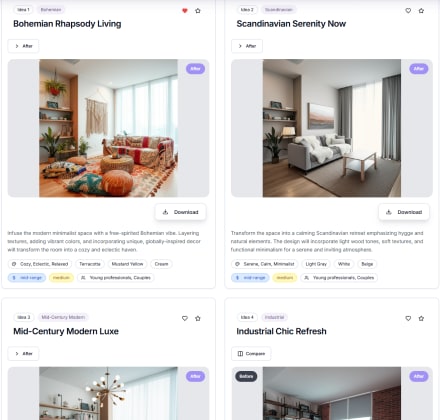
AI Ideation Mode: The Ultimate Guide to Creative Design Inspiration
Design inspiration doesn't always come easily. Sometimes you look at a room and feel stuck, unsure of which direction to take your renovation or redesign project. That's where AI Ideation Mode comes in—a revolutionary feature that transforms a single room photograph into multiple creative design concepts, each offering a unique perspective on how your space could evolve.
What is AI Ideation Mode?
AI Ideation Mode is an advanced creative tool that uses cutting-edge artificial intelligence to analyze your room and generate multiple distinct design ideas. Unlike other AI design tools that focus on single transformations, Ideation Mode is specifically designed to spark creativity by presenting diverse approaches to your space—from budget-friendly updates to luxury makeovers, from subtle refinements to dramatic overhauls.
The Creative Problem Ideation Mode Solves
Every designer, homeowner, and decorator faces the same challenge: creative block. You know you want to change something about your room, but you're not sure what. Maybe you're torn between different styles, or perhaps you need fresh perspectives to break out of your usual design thinking. Ideation Mode addresses this by:
- Expanding your creative horizons with unexpected design directions
- Providing multiple starting points for your design journey
- Showing budget-conscious and luxury options side by side
- Inspiring confidence in bold design choices you might not have considered
How AI Ideation Mode Works
1. Intelligent Room Analysis
When you upload your room photo, our advanced AI system performs comprehensive analysis:
Spatial Understanding
- Identifies room dimensions and proportions
- Recognizes architectural features like windows, doors, and built-ins
- Analyzes natural light patterns and room orientation
- Detects existing furniture and decor elements
Style Recognition
- Understands current design aesthetic
- Identifies style constraints and opportunities
- Recognizes budget indicators from existing elements
- Analyzes room function and lifestyle needs
2. Creative Concept Generation
The AI doesn't just modify your existing design—it generates completely new creative directions:
Diverse Style Exploration
- Modern minimalist approaches for clean, uncluttered living
- Bohemian maximalist concepts with rich textures and colors
- Traditional elegance with timeless furniture and refined details
- Industrial chic featuring exposed elements and urban aesthetics
- Scandinavian hygge focused on comfort and natural materials
Budget-Conscious Innovation
- High-impact, low-cost design solutions
- DIY-friendly transformation ideas
- Repurposing and upcycling existing elements
- Affordable furniture and decor alternatives
Luxury Inspiration
- Premium material selections and high-end finishes
- Designer furniture and statement pieces
- Professional lighting design and custom solutions
- Sophisticated color palettes and textures
3. Visual Concept Delivery
Each generated idea includes:
- Photorealistic visualization showing the complete transformation
- Detailed description explaining the design concept and approach
- Style rationale outlining why this direction works for your space
- Implementation suggestions for bringing the vision to life
When to Use AI Ideation Mode
Perfect Scenarios for Ideation Mode
1. Starting a New Project When you're beginning a room redesign and need inspiration for direction. Upload your current space and explore 3-6 different design concepts to find your preferred aesthetic direction.
2. Breaking Creative Blocks If you're stuck on a design project and need fresh perspectives. Sometimes seeing unexpected approaches can unlock new creative pathways.
3. Client Presentations Interior designers can use Ideation Mode to quickly generate multiple concepts for client presentations, showing various style and budget options.
4. Exploring Budget Options When you need to see both affordable and luxury approaches to the same space, helping you decide where to invest your renovation budget.
5. Style Experimentation Perfect for exploring styles you're curious about but unsure how they'd look in your specific space.
Complementing Other AI Tools
Ideation Mode works beautifully alongside other AI design features:
- Start with Ideation to explore creative directions
- Use Visualize Mode to refine your chosen concept
- Apply Compose Mode to perfect furniture placement
- Implement Cost Analysis to budget your preferred design
Maximizing Your Ideation Results
Photography Tips for Better Concepts
Optimal Photo Conditions
- Good lighting: Natural daylight provides the best analysis
- Clear view: Capture the entire room without obstructions
- Straight angles: Level shots help AI understand proportions accurately
- Current state: Show the room as it is now, including existing furniture
Multiple Angles While one photo is sufficient, consider taking:
- Wide-angle view showing the entire space
- Corner perspectives revealing room depth
- Detail shots of interesting architectural features
Providing Effective Design Direction
Helpful Prompts Include:
- "I love entertaining and need spaces that bring people together"
- "We're a young family who needs both style and functionality"
- "I'm drawn to natural materials and earthy tones"
- "We want to maximize this small space while adding personality"
- "I'm interested in sustainable and eco-friendly design approaches"
Budget Guidance:
- "Show me both budget-friendly and luxury approaches"
- "I'm working with a limited budget but want maximum impact"
- "We're willing to invest in key pieces but want to save on accessories"
Real-World Ideation Mode Success Stories
Case Study 1: The Overwhelmed Homeowner
Challenge: Sarah had lived with the same living room design for 8 years and felt completely overwhelmed by renovation possibilities. She knew she wanted change but couldn't visualize any specific direction.
Ideation Mode Solution: Generated 6 distinct concepts including:
- Modern minimalist with neutral tones and clean lines
- Bohemian retreat with rich textiles and plants
- Mid-century modern with vintage furniture and warm woods
- Contemporary industrial with exposed brick and metal accents
- Cozy traditional with classic furniture and rich colors
- Scandinavian hygge with white walls and natural textures
Outcome: Sarah discovered she was drawn to the Scandinavian hygge concept—something she'd never considered before. She implemented the design over 6 months and describes her new space as "exactly what I didn't know I wanted."
Case Study 2: The Budget-Conscious Renter
Challenge: Mike wanted to transform his rental apartment bedroom without major modifications or large expenses.
Ideation Mode Result: Received creative concepts focusing on:
- Removable wallpaper accent walls
- Lighting solutions that didn't require electrical work
- Furniture arrangements that maximized the small space
- Color schemes using affordable textiles and accessories
- Storage solutions that doubled as decorative elements
Implementation: Chose a modern industrial concept executed through lighting, textiles, and furniture arrangement, spending under $800 for a complete transformation.
Case Study 3: The Professional Designer
Challenge: Interior designer Jessica needed to present diverse options to a client couple with very different style preferences.
Ideation Mode Application: Generated concepts that bridged different aesthetics:
- Transitional designs blending traditional and contemporary elements
- Eclectic approaches incorporating both partners' favorite styles
- Neutral foundations with style-specific accents
- Flexible designs that could evolve with changing preferences
Client Response: The couple found common ground in a transitional concept they both loved, leading to a successful project and referrals.
Advanced Ideation Techniques
Layered Exploration
Progressive Refinement
- Start with broad style exploration (6 diverse concepts)
- Choose your top 2-3 directions
- Run focused ideation on preferred concepts with specific prompts
- Use resulting inspiration for detailed planning
Style Fusion Discovery
Use prompts that blend multiple aesthetics:
- "Combine Scandinavian simplicity with bohemian warmth"
- "Mix modern furniture with traditional architectural details"
- "Blend industrial elements with cozy, family-friendly features"
Seasonal and Lifestyle Adaptation
Explore how your space could adapt to different needs:
- "Show me how this room could work for both work and relaxation"
- "Create concepts that transition well from day to evening entertaining"
- "Design approaches that work for both adults and children"
Common Misconceptions About AI Ideation
"AI Will Replace Human Creativity"
Reality: AI Ideation Mode enhances human creativity rather than replacing it. The tool generates starting points and inspiration, but the final design decisions, personal touches, and implementation require human insight and creativity.
"All AI Suggestions Will Look the Same"
Reality: Modern AI design tools like Ideation Mode are trained on vast, diverse datasets and specifically designed to generate varied, unique concepts. Each ideation session produces distinctly different approaches.
"AI Doesn't Understand Real-Life Constraints"
Reality: Advanced AI systems consider practical factors like room layout, natural light, and existing architectural features. When you provide context about budget, lifestyle, or preferences, the AI incorporates these constraints into the concepts.
Tips for Implementation Success
From Inspiration to Reality
Prioritize Elements by Impact
- High Impact: Paint color, lighting, major furniture pieces
- Medium Impact: Textiles, window treatments, accent furniture
- Low Impact: Accessories, artwork, small decorative elements
Phase Your Implementation
- Foundation Phase: Paint, lighting, major furniture
- Style Phase: Textiles, window treatments, secondary furniture
- Personality Phase: Accessories, artwork, plants, personal items
Budget Allocation Strategy
- 40% for major furniture and lighting
- 30% for paint, textiles, and window treatments
- 20% for accent furniture and storage solutions
- 10% for accessories and decorative elements
Working with Professionals
When to Consult Experts
- Structural changes or electrical work
- Custom built-ins or cabinetry
- Complex lighting design
- High-end material selection and sourcing
Sharing AI Concepts with Professionals
- Print or save your favorite ideation concepts
- Highlight specific elements you love in each design
- Discuss budget parameters and timeline constraints
- Ask for professional interpretation and adaptation of AI concepts
Professional Designer Applications
Client Consultation Enhancement
Streamlined Concept Development:
Professional interior designers are revolutionizing their client consultation process through AI Ideation Mode. Instead of spending hours creating initial concepts manually, designers can:
- Generate 3-6 diverse design directions within minutes
- Present comprehensive style options without extensive prep time
- Explore unexpected design possibilities that might not have occurred naturally
- Create mood boards and inspiration collections more efficiently
Enhanced Client Communication:
Visual communication is crucial in interior design, and AI Ideation Mode provides powerful tools for client interaction:
- Instant visualization of different style approaches helps clients understand abstract concepts
- Multiple options allow clients to compare and contrast preferences easily
- Budget-conscious alternatives show how different investment levels affect design outcomes
- Style education helps clients understand why certain approaches work better in their specific space
Collaborative Design Process:
Modern interior design is increasingly collaborative, with clients wanting to be involved in the creative process:
- Generate initial concepts together during consultation meetings
- Use AI suggestions as starting points for deeper creative discussions
- Adapt and modify concepts in real-time based on client feedback
- Create custom combinations using elements from multiple AI-generated ideas
Business Development Applications
Efficient Proposal Development:
For design professionals, AI Ideation Mode streamlines the often time-intensive proposal phase:
- Quick concept generation for new client pitches reduces proposal development time by 60-70%
- Multiple style options demonstrate range and capability to potential clients
- Visual proposals are more compelling than text-only descriptions
- Professional presentation materials can be created rapidly for client meetings
Market Differentiation:
In a competitive design market, offering AI-enhanced services provides clear advantages:
- Cutting-edge technology demonstrates innovation and forward-thinking approach
- Faster turnaround times allow designers to serve more clients efficiently
- Comprehensive exploration ensures no creative stone is left unturned
- Client satisfaction improves through better visual communication and options
Training and Education:
Design firms are using AI Ideation Mode for internal training and development:
- Junior designer education through exposure to diverse style approaches
- Style exploration for designers looking to expand their creative repertoire
- Client preference analysis by studying which AI-generated concepts resonate most
- Trend research by analyzing popular AI-generated style directions
Advanced Creative Techniques and Strategies
Multi-Room Storytelling
One of the most powerful applications of AI Ideation Mode is creating cohesive design stories across multiple rooms:
Whole-Home Design Consistency:
- Use similar prompts across different rooms to maintain style consistency
- Generate concepts that flow naturally from one space to another
- Create transition zones that bridge different functional areas
- Develop color palettes and material selections that work throughout the home
Progressive Design Evolution:
- Start with the most important room (usually living room or master bedroom)
- Use successful elements from initial concepts in subsequent room ideations
- Build complexity gradually, adding unique elements while maintaining coherence
- Create "design DNA" that runs through all spaces while allowing for individual character
Seasonal Design Adaptation
AI Ideation Mode excels at creating designs that can adapt to seasonal changes and different moods:
Year-Round Flexibility:
- Generate base concepts with seasonal adaptation potential
- Focus on foundational elements that work in all seasons
- Identify accent pieces and textiles that can be swapped seasonally
- Create storage solutions for seasonal decor rotation
Climate-Responsive Design:
- Summer concepts emphasize light fabrics, cool colors, and airy arrangements
- Winter designs focus on cozy textures, warm lighting, and intimate seating
- Transition season concepts balance comfort with freshness
- Consider regional climate patterns in long-term design planning
Cultural and Personal Style Integration
Cultural Heritage Incorporation:
AI Ideation Mode can help blend cultural elements with contemporary design:
- Generate concepts that honor cultural traditions while feeling modern
- Balance authentic cultural elements with current lifestyle needs
- Create fusion styles that respectfully combine different cultural influences
- Develop approaches that feel both global and personal
Lifestyle-Specific Customization:
- Entertaining-focused homes: Concepts emphasize flow, seating capacity, and social interaction
- Work-from-home spaces: Designs integrate productive work areas with comfortable living
- Family living: Concepts balance adult sophistication with child-friendly functionality
- Aging-in-place: Designs consider accessibility while maintaining aesthetic appeal
Color Psychology and Mood Creation
Emotional Design Outcomes:
AI Ideation Mode can be guided to create specific emotional experiences:
- Energizing spaces using warm colors, dynamic patterns, and engaging layouts
- Calming environments through cool tones, soft textures, and balanced proportions
- Inspiring atmospheres with unique elements, artistic details, and creative arrangements
- Grounding designs using natural materials, earth tones, and organic shapes
Psychological Comfort Optimization:
- Generate concepts that support mental well-being through design
- Create spaces that encourage specific behaviors (relaxation, creativity, social interaction)
- Balance stimulation and calm based on room function and user needs
- Consider circadian rhythms in lighting and color selection
The Future of AI-Powered Design Inspiration
Emerging Capabilities
AI design tools continue to evolve rapidly, with new capabilities emerging regularly:
Enhanced Personalization
- Learning from your style preferences across multiple projects
- Incorporating family lifestyle and functional needs more precisely
- Adapting to regional design trends and cultural preferences
Improved Integration
- Seamless connection with furniture retailers and suppliers
- pricing and availability information
- Coordination with contractors and design professionals
Sustainability Focus
- Emphasis on eco-friendly materials and energy-efficient designs
- Suggestions for repurposing and upcycling existing elements
- Long-term design approaches that evolve rather than require replacement
Integration with Smart Home Technology
IoT-Enhanced Design Concepts:
Future AI Ideation Mode capabilities will integrate with smart home systems:
- Responsive lighting that adapts to design concepts automatically
- Climate optimization that considers design elements in HVAC planning
- Automated furniture that can reconfigure based on different ideation concepts
- Integrated technology that becomes invisible within design concepts
Data-Driven Design Optimization:
- Usage pattern analysis to inform more practical design concepts
- Energy efficiency integration in all generated design ideas
- Health and wellness monitoring through design element selection
- Maintenance optimization based on actual living patterns
Augmented and Virtual Reality Integration
Immersive Design Exploration:
The next generation of AI Ideation Mode will include AR/VR capabilities:
- Virtual walkthrough of generated concepts before implementation
- Real-time modification of AI concepts in 3D space
- Scale and proportion verification through immersive experience
- Collaborative virtual design sessions with remote participants
Enhanced Visualization:
- Lighting simulation showing concepts at different times of day
- Texture experience allowing users to "feel" materials virtually
- Sound environment integration for complete sensory design concepts
- Seasonal visualization showing how concepts change throughout the year
Sustainability and Environmental Integration
Eco-Conscious Design Generation:
Future AI systems will prioritize environmental considerations:
- Carbon footprint analysis integrated into every design concept
- Sustainable material prioritization in all generated ideas
- Lifecycle assessment of proposed design elements
- Local sourcing optimization to reduce environmental impact
Circular Economy Integration:
- Upcycling suggestions incorporated into design concepts
- End-of-life planning for proposed furniture and materials
- Sharing economy integration for occasional-use items
- Modular design concepts that adapt and evolve over time
Global Design Intelligence
Cultural Sensitivity Enhancement:
Advanced AI will better understand and respect cultural design traditions:
- Regional style integration based on geographic location
- Cultural appropriation awareness in design concept generation
- Local craft and artisan integration in material suggestions
- Historical context consideration in renovation and restoration projects
Climate-Responsive Design:
- Weather pattern integration in material and layout selection
- Natural disaster consideration in structural and material choices
- Seasonal affective disorder consideration in lighting and color choices
- Local building code integration in all generated concepts
Impact on the Design Industry
AI Ideation Mode represents a democratization of design inspiration, making professional-quality concepts accessible to everyone while enhancing rather than replacing human creativity and expertise.
Professional Designer Evolution:
- Designers shifting focus from concept generation to interpretation and execution
- Enhanced specialization in areas requiring human expertise (custom solutions, complex projects)
- Improved client service through faster turnaround and more options
- Greater creativity through AI collaboration rather than replacement
Homeowner Empowerment:
- Access to professional-quality design concepts without consultation costs
- Better preparation for professional consultations when desired
- Increased confidence in design decisions through visualization
- Reduced risk of costly design mistakes through concept exploration
Industry Transformation:
- Design services becoming more accessible and affordable
- Increased focus on implementation quality over initial concept development
- Greater emphasis on personalization and individual style expression
- Enhanced collaboration between AI tools and human expertise
Getting Started with AI Ideation Mode
Your First Ideation Session
- Prepare Your Space: Take a clear, well-lit photo of your room
- Set Your Intentions: Think about what you hope to achieve with the redesign
- Choose Your Scope: Decide how many ideas you want to explore (3-6 is optimal)
- Provide Context: Add any specific preferences, constraints, or goals
- Explore Openly: Be receptive to unexpected directions and surprising concepts
Making the Most of Each Concept
- Study each design carefully to understand the underlying principles
- Identify specific elements that resonate with you across different concepts
- Consider hybrid approaches combining favorite elements from multiple ideas
- Think beyond the visual to consider how each concept would feel to live in daily
Measuring Success and ROI of AI-Driven Design
Quantifiable Benefits
Time Savings:
- Professional designers report 60-70% reduction in initial concept development time
- Homeowners spend less time researching and can move to implementation faster
- Decision-making acceleration through visual comparison of options
- Reduced revision cycles through better upfront exploration
Cost Optimization:
- Budget clarity through early visualization of different cost approaches
- Mistake prevention by seeing concepts before purchasing
- Value engineering through AI-generated alternative approaches
- Professional consultation efficiency when working with designers
Satisfaction Improvements:
- Confidence in decisions through comprehensive option exploration
- Reduced regret from seeing alternatives before committing
- Enhanced creativity leading to more personalized spaces
- Better communication with family members and professionals
Success Metrics and Tracking
Personal Project Success:
- Track concept-to-completion time for your projects
- Measure satisfaction levels with final implemented designs
- Document cost savings from better planning and decision-making
- Record learning and skill development in design thinking
Professional Application ROI:
- Monitor client satisfaction improvements with enhanced concept presentation
- Track proposal win rates when using AI-generated concepts
- Measure time-to-revenue improvements through faster project initiation
- Document repeat business and referral rate improvements
Troubleshooting Common Challenges
When AI Concepts Don't Match Your Vision
Refining Your Approach:
- Be more specific in your prompts and descriptions
- Provide reference images or style examples you love
- Consider your true preferences vs. what you think you should like
- Try multiple sessions with different approaches to the same room
Working with Unexpected Results:
- Look deeper into concepts that initially seem wrong—they may contain valuable insights
- Extract elements you like from concepts that don't work overall
- Consider lifestyle fit beyond just aesthetic appeal
- Use concepts as inspiration rather than exact blueprints
Adapting Concepts to Real-World Constraints
Budget Limitations:
- Identify the most impactful elements from expensive concepts
- Look for DIY alternatives to professional elements
- Phase implementation to spread costs over time
- Focus on paint, lighting, and textiles for maximum transformation per dollar
Rental Property Restrictions:
- Extract color palettes and styling approaches that work with removable elements
- Focus on furniture, textiles, and accessories rather than permanent changes
- Use concepts to guide thrift store and budget shopping decisions
- Adapt professional concepts to DIY-friendly implementations
Space Limitations:
- Focus on organizational and layout elements from concepts
- Adapt large-room ideas to smaller spaces through scaling and selection
- Use color and lighting strategies from spacious concepts
- Extract storage and functionality insights applicable to any size space
Advanced Implementation Strategies
Creating Your Personal Design Process
Systematic Approach:
- Initial Ideation Session: Generate 3-6 diverse concepts
- Concept Analysis: Identify favorite elements across different ideas
- Hybrid Development: Combine preferred elements into custom approach
- Reality Check: Assess feasibility, budget, and timeline
- Implementation Planning: Break down into phases and specific tasks
Documentation and Planning:
- Create digital mood boards combining AI concepts with personal inspiration
- Maintain concept libraries for different rooms and future projects
- Track successful elements for reuse in other spaces
- Document lessons learned for continuous improvement
Building Design Confidence
Developing Your Eye:
- Study successful concepts to understand why they work
- Practice identifying elements you love across different styles
- Learn to articulate what appeals to you in design terms
- Build vocabulary for communicating with professionals
Trust Your Instincts:
- Remember that you'll be living in the space daily
- Consider how concepts make you feel, not just how they look
- Balance trendy elements with timeless basics
- Prioritize comfort and functionality alongside aesthetics
Conclusion: Unlocking Your Space's Creative Potential
AI Ideation Mode represents more than just another design tool—it's a creativity amplifier that helps you see your space through fresh eyes and discover design directions you might never have considered. Whether you're embarking on a complete renovation, refreshing a single room, or simply seeking inspiration for small changes, Ideation Mode provides the creative catalyst to transform uncertainty into excited anticipation.
The beauty of AI-powered ideation lies not in replacing human creativity, but in expanding it. Every concept generated becomes a starting point for your own creative journey, a foundation upon which you can build a space that truly reflects your personality, lifestyle, and dreams.
As AI technology continues to evolve, the possibilities for creative exploration will only expand. The integration of smart home technology, sustainability considerations, cultural sensitivity, and personalization will make AI Ideation Mode an even more powerful tool for creating spaces that are not just beautiful, but truly meaningful and functional for the people who inhabit them.
The democratization of professional-quality design inspiration means that every homeowner can access the creative tools and insights that were once available only to industry professionals. This doesn't diminish the value of professional designers—instead, it creates better-informed clients and more efficient collaboration between AI tools and human expertise.
Ready to discover what your space could become? Upload your room photo, set your creative intentions, and let AI Ideation Mode show you possibilities you never imagined. Your next favorite room is just one ideation session away, and the journey from inspiration to implementation has never been more accessible or exciting.
Ready to explore unlimited design possibilities? Try AI Ideation Mode today and discover creative directions that will transform how you see your space.
Related Articles
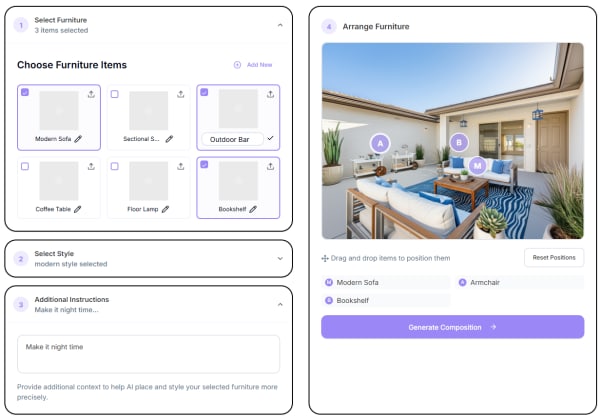
AI Compose Mode: Master Virtual Furniture Placement and Room Staging | Complete Professional Guide to Intelligent Furniture Arrangement – Advanced Layout Algorithms, Real Estate Virtual Staging & Design Optimization | Transform Empty Spaces with AI-Powered Composition
Discover how AI Compose Mode revolutionizes furniture placement and virtual staging. Learn professional techniques for creating perfectly balanced, functional, and beautiful room layouts.

AI Furniture Selection: Finding Perfect Pieces for Room Optimization | Smart Interior Design Solutions 2025
Discover how AI revolutionizes furniture selection through intelligent space analysis, style matching, and optimization algorithms that find perfect pieces for your space, budget, and lifestyle needs.

AI-Powered Client Presentations | Professional Interior Design Visualization Tools – Save 15 Hours Per Project & Boost Client Satisfaction by 47% | Complete Designer Workflow Revolution
Revolutionize your interior design workflow with AI visualization tools. Learn how leading designers save 15+ hours per project while improving client satisfaction by 47% through enhanced presentations.
Ready to Transform Your Space?
See how your room would look with a completely new design. Our AI can help you visualize different styles in minutes.